
Foreign Investment in Hydropower Sector in Nepal
The Government of Nepal has liberalized hydropower investment by allowing full foreign ownership, offering incentives, and ensuring a clear policy framework. Key laws governing foreign investment in this sector include the Foreign Investment and Technology Transfer Act, 2075 (FITTA), the Foreign Exchange (Regulation) Act, 2019 (FERA), and the Public-Private Partnership and Investment Act, 2075.
Article
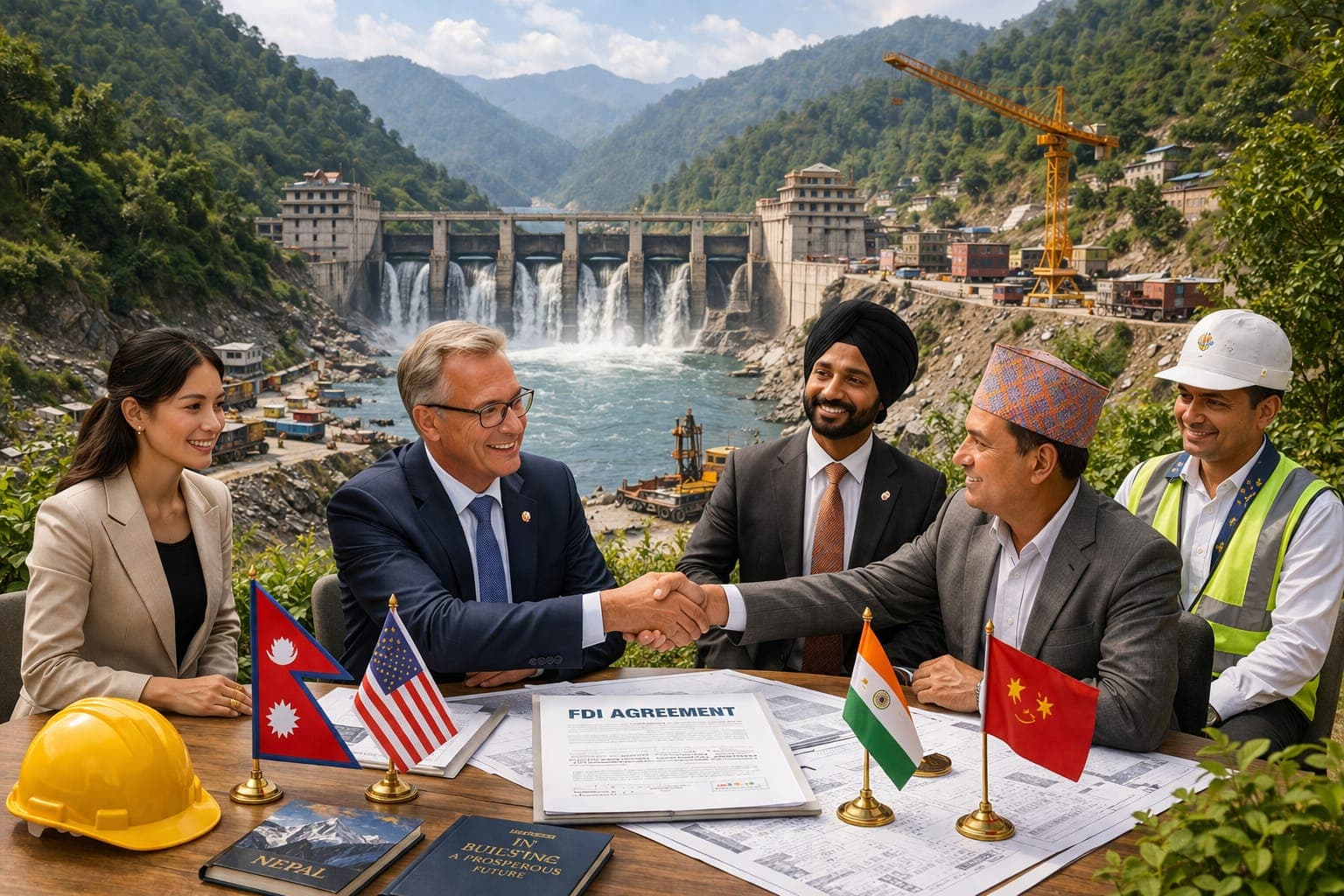
Foreign Direct Investment (FDI) has become a vital funding source for developing infrastructure and energy in Nepal, especially within the hydropower sector. Nepal holds an enormous hydropower potential—around 83,000 MW—yet only a small portion has been developed so far. A lack of sufficient domestic capital and technical know-how makes foreign investment critical for large-scale hydropower projects. This paper emphasizes the role of foreign capital in advancing Nepal’s hydropower sector, outlines the existing government policies and legal frameworks that regulate FDI, identifies the obstacles foreign investors commonly face, and examines possible pathways for sustainable energy expansion. Ultimately, the paper argues that enhancing the investment climate, maintaining political stability, and facilitating cross-border electricity trade are essential steps to fully realize Nepal’s hydropower potential through FDI.
Introduction
Hydropower holds a strategic place in Nepal’s development agenda. Blessed with around 6,000 rivers and an estimated technical potential of up to 83,000 MW (or around 42,000 MW economically viable) the country stands at the threshold of becoming a regional energy hub. By early 2025, Nepal’s installed hydropower-dominated capacity stood at approximately 3,000 MW, representing only a small fraction of its technically feasible potential (42,000 MW).Given this gap, domestic resources alone have proven insufficient to expedite large-scale hydropower development. This context makes FDI especially important: foreign investors bring not just capital but technical know-how, global project management experience, and connected export market access.
The Government of Nepal has recognized these dynamics and moved to liberalize the investment regime for hydropower with full foreign ownership permitted, incentives offered and a clear policy environment declared. Yet, the inflow of FDI into hydropower, while significant in some respects, is still hampered by structural, regulatory and market constraints. For instance, in FY 2021/22 the hydropower sector accounted for around 32.8 % of total FDI inflow in Nepal. This suggests both promise and limitations.
Laws governing Foreign Investment in Hydropower Sector in Nepal
The approval of foreign investment in Nepal is governed by: (a) Foreign Investment and Technology Transfer Act, 2075 (2019) (“FITTA”), (b) Foreign Exchange (Regulation) Act, 2019 (1962) (“FERA”), and (c) Public-Private Partnership and Investment Act, 2075 (2019).
1. What is the percentage of investment that foreign investment is allowed in the hydropower sector?
Foreign investors can invest up to 100% of the total investment in the hydropower sector in Nepal. Most sectors, including hydropower, allow full foreign ownership unless a specific sectoral cap applies.
2. What are the steps for the approval of foreign investment in the hydropower sector?
The general steps for obtaining foreign investment approval in Nepal are as follows:
- Step 1: Obtain Foreign Investment Approval from the Department of Industry (“DOI”) or the Investment Board of Nepal (“IBN”) (see note below).
- Step 2: Incorporate the Company at the Office of the Company Registrar.
- Step 3: Register for Taxes (PAN/VAT) at the Inland Revenue Office.
- Step 4: Obtain Business Registration at the Local Ward Office.
- Step 5: Obtain a recommendation letter from the Local Ward Office for Industry Registration.
- Step 6: Register the Industry at the Department of Industry.
- Step 7: Obtain a "non-blacklisted certificate" from the Credit Information Bureau.
- Step 8: Open a local bank account for the company.
- Step 9: Record the investment amount before Nepal Rastra Bank (NRB).
Please Note:
The Department of Industry (DOI) is the authority approving foreign investment in Nepal for projects with an investment amount of NPR 6 billion or less. However, approval of the Investment Board of Nepal (IBN) is required for hydropower projects having:
• A capacity of more than 200 MW, or
• An investment amount above NPR 6 billion.
3. Is it compulsory to issue shares to local people?
Although foreign investors can invest up to 100% in energy projects, there is no legal compulsion to issue shares to local people. However, considering the need for local participation, many projects voluntarily issue shares to the local community and the general public.
- Note: If a project issues shares to foreign investors, prior approval from the Electricity Regulatory Commission may be required if the share structure changes by more than 5%.
4. What are the fiscal incentives provided to hydropower project developers?
The following incentives are available for hydropower projects in Nepal under the Hydropower Development Policy and Industrial Enterprises Act, 2076 (2020):
| Incentive Type | Description |
|---|---|
| Corporate Income Tax Exemption | Projects exceeding 100 MW receive a 7-year tax holiday from the date of commercial operation. |
| Customs Duty Exemption | 100% exemption on all imported equipment, machinery, and materials for hydropower construction. |
| Value-Added Tax (VAT) Exemption | Exemption on capital goods and equipment imports for hydropower projects. |
| Guaranteed Power Purchase | Foreign investors obtain guaranteed power purchase agreements with Nepal Electricity Authority (NEA). |
| Fixed Royalty Rates | Royalty rates remain fixed at 12% of gross revenue for hydropower projects. |
Under the Hedging Related Regulation, 2075 (2019), hydropower projects with a capacity of 100 MW or more and foreign loan investment can obtain hedging facilities from Nepal Rastra Bank to stabilize foreign exchange rates for repatriation.
Key features include
- Maximum hedging period 5 years (renewable).
- Applicable to foreign currencies specified by NRB.
- Hedging fees determined by NRB based on exchange rate risk.
Disclaimer: This article is for informational purposes only and shall not be construed as legal advice, advertisement, personal communication, solicitation, or inducement of any sort from the firm or any of its members. Laws are subject to amendment, and judicial/administrative interpretations may vary. The firm shall not be liable for consequences arising out of any action undertaken by any person relying on the information provided herein. Readers are strongly advised to consult a licensed lawyer practicing in Nepal for advice specific to their situation.
Frequently Asked Questions (FAQs)
- What is the minimum investment required for foreign investment in Nepal's hydropower sector?
- Can a foreign investor repatriate profits and capital from a hydropower project in Nepal?
- Are there any sectors where foreign investment is prohibited in Nepal?
- How long does the foreign investment approval process take in Nepal?
- Is prior approval from Nepal Rastra Bank (NRB) required to bring in foreign investment?
Need Help With This Topic?
Share your situation with our team and get practical legal guidance aligned with your objectives.
Book ConsultationBrowse Publications